One of the perennial fears of taxpayers is getting audited by the IRS. Financially, few scenarios strike such fear into the heart of taxpayers. However, taxpayers can probably breathe a sigh of relief – at least for now. This is because the rate at which the IRS is initiating audits of individual taxpayers is dropping like a stone.
Decline in Audit Rates
The rate at which the IRS is auditing individual taxpayers has declined overall between the years of 2010 and 2019 (2020 data is too new and 2021 returns are still being filed through the extension period). According to the Government Accountability Office (GAO), nearly 1 percent of all taxpayers were audited in 2010 compared to only 0.25 percent for the tax year 2019. The GAO chart below shows the ski slope-like drop in individual tax audit rates over the period.
While the IRS continues to audit higher earning taxpayers more often overall, during the 10-year period audit rates consistently declined for all levels of taxpayers, except those with the highest incomes. The audit rate for taxpayers with income between $200k and $500k experienced the largest drop, with the audit rate declining from 2.3 percent down to 0.2 percent; a 92 percent reduction in audits. Taxpayers with the highest incomes, defined as $10 million or more, saw a resurgence in audit rates from 2017-2018; however, even they experienced an overall decline, dropping from 21.2 percent in 2019 to only 3.9 percent in 2019 – equating to an 81 percent decline.
Impact on the Treasury
There is the theory that the prospect of a tax audit leads to greater voluntary compliance. In other words, if people think they won’t get audited, then they are more likely to cheat on their taxes.
Non-compliance with tax laws and regulations have a material impact on the Treasury. According to the IRS, it is estimated that on average, individual taxpayers under-reported nearly $250 billion a year for the period 2011-2013. This obviously leads to the non-collection of taxes that are otherwise owed the government and raises issues of fairness for taxpayers who are playing by the rules.
Why the Decline in Audit Rates?
One of the main drivers is a lack of resources at the IRS, a combination of both reduced funding and less auditors on staff. The number of agents working for the IRS has declined across the board since 2011. Tax examiners, the type who handle basic audits by mail, have dropped by 18 percent. Meanwhile, revenue agents, who handle the more complex cases in the field, declined by more than 40 percent over the same period.
Demographics point to an increase in these trends as there are a wave of coming retirements in the IRS. Over the next three years, nearly 14 percent of current tax examiners and 16 percent of revenue agents are expected to retire. Stack on top of this the fact that the inexperience of newer agents and the time to complete audits is also taking longer.
Conclusion
The IRS claims it is missing out on millions in legally due tax revenues due to the inability to maintain enforcement. They say they need more funding to hire more agents to perform more audits, which not only find fraud in the audits themselves but also increase overall compliance due to the pressure this creates.
Currently, there is no political focus on bringing major new resources to the IRS, so it’s not likely to see an uptick in individual tax audit rates anytime soon. The trend of focusing on the highest earners, however, will likely continue as this is where the IRS can find the most bang for its buck.
The IRS is Auditing Fewer Returns than Ever
July 1, 2022 · Blog, Tax and Financial News
⏱ 3 min read
One of the perennial fears of taxpayers is getting audited by the IRS. Financially, few scenarios strike such fear into the heart of taxpayers. However, taxpayers can probably breathe a sigh of relief – at least for now. This is because the rate at which the IRS is initiating audits of individual taxpayers is dropping like a stone.
Decline in Audit Rates
The rate at which the IRS is auditing individual taxpayers has declined overall between the years of 2010 and 2019 (2020 data is too new and 2021 returns are still being filed through the extension period). According to the Government Accountability Office (GAO), nearly 1 percent of all taxpayers were audited in 2010 compared to only 0.25 percent for the tax year 2019. The GAO chart below shows the ski slope-like drop in individual tax audit rates over the period.
While the IRS continues to audit higher earning taxpayers more often overall, during the 10-year period audit rates consistently declined for all levels of taxpayers, except those with the highest incomes. The audit rate for taxpayers with income between $200k and $500k experienced the largest drop, with the audit rate declining from 2.3 percent down to 0.2 percent; a 92 percent reduction in audits. Taxpayers with the highest incomes, defined as $10 million or more, saw a resurgence in audit rates from 2017-2018; however, even they experienced an overall decline, dropping from 21.2 percent in 2019 to only 3.9 percent in 2019 – equating to an 81 percent decline.
Impact on the Treasury
There is the theory that the prospect of a tax audit leads to greater voluntary compliance. In other words, if people think they won’t get audited, then they are more likely to cheat on their taxes.
Non-compliance with tax laws and regulations have a material impact on the Treasury. According to the IRS, it is estimated that on average, individual taxpayers under-reported nearly $250 billion a year for the period 2011-2013. This obviously leads to the non-collection of taxes that are otherwise owed the government and raises issues of fairness for taxpayers who are playing by the rules.
Why the Decline in Audit Rates?
One of the main drivers is a lack of resources at the IRS, a combination of both reduced funding and less auditors on staff. The number of agents working for the IRS has declined across the board since 2011. Tax examiners, the type who handle basic audits by mail, have dropped by 18 percent. Meanwhile, revenue agents, who handle the more complex cases in the field, declined by more than 40 percent over the same period.
Demographics point to an increase in these trends as there are a wave of coming retirements in the IRS. Over the next three years, nearly 14 percent of current tax examiners and 16 percent of revenue agents are expected to retire. Stack on top of this the fact that the inexperience of newer agents and the time to complete audits is also taking longer.
Conclusion
The IRS claims it is missing out on millions in legally due tax revenues due to the inability to maintain enforcement. They say they need more funding to hire more agents to perform more audits, which not only find fraud in the audits themselves but also increase overall compliance due to the pressure this creates.
Currently, there is no political focus on bringing major new resources to the IRS, so it’s not likely to see an uptick in individual tax audit rates anytime soon. The trend of focusing on the highest earners, however, will likely continue as this is where the IRS can find the most bang for its buck.
Disclaimer
These articles provide general information on tax, accounting, and financial topics for small businesses and individuals. They are educational in nature and are not specific legal, accounting, financial, tax, or other professional advice, and should not be relied upon as such. This content was prepared by Service2Client and may have been reviewed or edited by the website owner for accuracy and compliance. Look for a trust mark below for verification details. No representation is made that any approach described will achieve a particular result, and no regulatory or professional body has reviewed or endorsed this content. Because each situation is different, readers should consult a qualified professional about their specific circumstances before acting. Images accompanying these articles are protected by copyright and may not be copied or reused.
COVID-19 impacted the economy dramatically and commercial real estate was no exception in terms of decreased values. Often, the real property could no longer service the debt used to finance it. This debt restructuring and resulting debt forgiveness can result in taxable income.
Taxable Income and Debt Cancellation
If you have a $80,000 loan and the bank reduced the amount you owe down to $50,000, then you have an economic benefit of $30,000, which should be treated as taxable income. This is indeed how cancellation of debt is treated, but there are exceptions such as in the case of bankruptcy or insolvency. There is another unique scenario that applies only to commercial real estate.
Assuming that the taxpayer is not a C-corporation, debt cancellation is excludable from taxable income if it results from qualified real property business indebtedness (QRPBI). QRPBI is debt taken on to buy real property used for commercial purposes. Starting in 1993, debt used for building or improving a property also qualify.
As we all know, there is no such thing as a free lunch. In order for debt cancellation to not be considered current taxable income, the taxpayer must reduce their basis in the real property by this same amount. This does not cancel the income; instead, it defers its recognition and helps cash flow as a result. Below, we look at an example of how this works.
Illustrative Example
Assume David bought a property in 2017 and he uses it for business purposes. In 2022, the property has a first mortgage of $200,000 and a second mortgage of $100,000 (both with the same bank), with a fair market value (FMV) of $240,000. He negotiates with the bank to reduce the second mortgage down to $20,000, resulting in income from the cancellation of debt of $80,000.
The amount of debt cancellation that can be deferred is equal to the amount of the second mortgage before the debt cancellation, less the FMV minus the first mortgage. In David’s case, before debt cancellation, the FMV ($240k) minus the first mortgage ($200k) was $40,000. The balance of the second mortgage ($100k) exceeded this by $60,000. Out of the total debt cancellation of $80,000, this $60k is subject to deferral, with only the remaining $20,000 reported as immediate taxable income.
The $60,000 is not considered as taxable income only to the extent that David has sufficient adjusted tax basis in the depreciable real property to absorb this as a reduction in basis. Assuming this is the case, the reduction in basis applies the first day of the tax year after the debt cancellation (unless the property is sold before year-end – then it applies immediately).
In the example above, David would include the $10,000 of cancellation of debt income on his 2022 tax return and adjust his basis in the real property by $60,000 as of Jan. 1, 2023.
Filing Mechanics
For real estate held via partnerships instead of by individuals, determining if debt is QRPBI qualified happens at the entity level, although reductions of basis are done at the individual level for each partner, allowing individual planning. The election to defer cancellation of debt income is recorded on Form 982.
Conclusion
The COVID pandemic caused many real estate investors to restructure their debts. The option to defer debt income cancellation offers a great tax planning opportunity by delaying taxable income and improving cash flows.
Tax Break for Commercial Real Estate Investors
June 1, 2022 · Blog, Tax and Financial News
⏱ 3 min read
COVID-19 impacted the economy dramatically and commercial real estate was no exception in terms of decreased values. Often, the real property could no longer service the debt used to finance it. This debt restructuring and resulting debt forgiveness can result in taxable income.
Taxable Income and Debt Cancellation
If you have a $80,000 loan and the bank reduced the amount you owe down to $50,000, then you have an economic benefit of $30,000, which should be treated as taxable income. This is indeed how cancellation of debt is treated, but there are exceptions such as in the case of bankruptcy or insolvency. There is another unique scenario that applies only to commercial real estate.
Assuming that the taxpayer is not a C-corporation, debt cancellation is excludable from taxable income if it results from qualified real property business indebtedness (QRPBI). QRPBI is debt taken on to buy real property used for commercial purposes. Starting in 1993, debt used for building or improving a property also qualify.
As we all know, there is no such thing as a free lunch. In order for debt cancellation to not be considered current taxable income, the taxpayer must reduce their basis in the real property by this same amount. This does not cancel the income; instead, it defers its recognition and helps cash flow as a result. Below, we look at an example of how this works.
Illustrative Example
Assume David bought a property in 2017 and he uses it for business purposes. In 2022, the property has a first mortgage of $200,000 and a second mortgage of $100,000 (both with the same bank), with a fair market value (FMV) of $240,000. He negotiates with the bank to reduce the second mortgage down to $20,000, resulting in income from the cancellation of debt of $80,000.
The amount of debt cancellation that can be deferred is equal to the amount of the second mortgage before the debt cancellation, less the FMV minus the first mortgage. In David’s case, before debt cancellation, the FMV ($240k) minus the first mortgage ($200k) was $40,000. The balance of the second mortgage ($100k) exceeded this by $60,000. Out of the total debt cancellation of $80,000, this $60k is subject to deferral, with only the remaining $20,000 reported as immediate taxable income.
The $60,000 is not considered as taxable income only to the extent that David has sufficient adjusted tax basis in the depreciable real property to absorb this as a reduction in basis. Assuming this is the case, the reduction in basis applies the first day of the tax year after the debt cancellation (unless the property is sold before year-end – then it applies immediately).
In the example above, David would include the $10,000 of cancellation of debt income on his 2022 tax return and adjust his basis in the real property by $60,000 as of Jan. 1, 2023.
Filing Mechanics
For real estate held via partnerships instead of by individuals, determining if debt is QRPBI qualified happens at the entity level, although reductions of basis are done at the individual level for each partner, allowing individual planning. The election to defer cancellation of debt income is recorded on Form 982.
Conclusion
The COVID pandemic caused many real estate investors to restructure their debts. The option to defer debt income cancellation offers a great tax planning opportunity by delaying taxable income and improving cash flows.
Disclaimer
These articles provide general information on tax, accounting, and financial topics for small businesses and individuals. They are educational in nature and are not specific legal, accounting, financial, tax, or other professional advice, and should not be relied upon as such. This content was prepared by Service2Client and may have been reviewed or edited by the website owner for accuracy and compliance. Look for a trust mark below for verification details. No representation is made that any approach described will achieve a particular result, and no regulatory or professional body has reviewed or endorsed this content. Because each situation is different, readers should consult a qualified professional about their specific circumstances before acting. Images accompanying these articles are protected by copyright and may not be copied or reused.
At the very end of March, the House of Representatives passed a version of the bill known as Secure 2.0. The bill passed the House with overwhelming bipartisan support in a 414-5 vote. The House version still needs to pass in the Senate, where there are differing ideas on exactly what the bill should contain. There is strong support, so it is less of a question of if Secure 2.0 will become law than what exact version.
The Secure 2.0 bill in any version aims to help Americans save for retirement through a variety of mechanisms and changes in tax law. Here are some highlights of what the bill hopes to accomplish and how. We’ll also note differences between the House and Senate plans throughout.
Sign Up More Workers for Retirement Plans
One way the House version of the bill aims to help people save for retirement is to simply get them into a plan. The law would automatically enroll workers in 401(k), 403(b) and SIMPLE IRA retirement plans in their workplace; however, they can opt out. It’s been shown that most people simply won’t take action, meaning they won’t enroll if they have to proactively sign up – and similarly won’t opt out. The Senate version does not require auto enrollment, but it does give companies incentives to structure plans so that they auto enroll workers.
Auto enrollment in the House version starts at three percent contributions and increases yearly until participants are contributing 10 percent of their pay. Business with 10 or fewer employees are exempt.
Encourage Small Employers
Workplace retirement plans come with administrative, financial and legal burdens just to set up and offer the plan. This is before any type of employer contributions and is often a roadblock to small employers offering plans to their employees. To help encourage small employers, the bill offers a retirement plan start-up tax credit of 100 percent for the first three years to cover these costs.
Bigger Catch-Up Contributions
Right now, 401(k) plan catch-up contributions for workers 50 and older are capped at $6,500 for 401(k) plans. Both the House and Senate versions offer to increase these amounts, but in different ways.
The House version increases 401(k) catch-up contributions up to $10,000 for those 62, 63 or 64 starting in 2024. A more generous version is offered by the Senate, allowing the same $10,000 limit but to all who are 60 or older.
There is a “catch” to the catch-up, however. Under both versions, all catch-up contributions to 401(k) plans will be treated as Roth contributions; i.e., after tax contributions beginning in 2023. Currently, workers can make the contributions on either a pre-tax or post-tax (Roth) basis.
Push-Out Mandatory Required Distributions
The House version would extend the age for taking required minimum distributions (RMD) from retirements plans from 72 up to 75, incrementally over 3 years (73 in 2023, 74 in 2030 and 75 in 2033).
The Senate plan raises the age to 75 by 2032 and also waives RMDs entirely for those with less than $100,000 in aggregate retirement savings. It also reduces the penalty for not taking RMDs down to 25 percent (currently 50 percent).
Expand Employer Matching
The way the vast majority of retirement plans work is that employees contribute a portion of their salary and then the employer contributes a matching amount of 50 percent or 100 percent of what employee saves (up to a limit). The Secure 2.0 bill proposes to make student loan payments qualify as deferrals the same as plan contributions. This means that if you make student loan payments, your employer can now make a matching contribution to your retirement plan account even though you are not actually making any contributions into the plan itself. This is not a requirement, but an option for employers.
Create a Lost and Found for Retirement Plans
It’s common for workers to lose track of retirement plans from previous jobs when they move and change jobs. The bill would create a national lost and found to aid people in locating plans they may have inadvertently left behind or forgotten about.
Conclusion
In whatever form the final bill takes shape, it will give Americans more options to save for retirement and expand access to workplace plans.
Secure 2.0 Retirement Bill
May 1, 2022 · Blog, Tax and Financial News
⏱ 4 min read
At the very end of March, the House of Representatives passed a version of the bill known as Secure 2.0. The bill passed the House with overwhelming bipartisan support in a 414-5 vote. The House version still needs to pass in the Senate, where there are differing ideas on exactly what the bill should contain. There is strong support, so it is less of a question of if Secure 2.0 will become law than what exact version.
The Secure 2.0 bill in any version aims to help Americans save for retirement through a variety of mechanisms and changes in tax law. Here are some highlights of what the bill hopes to accomplish and how. We’ll also note differences between the House and Senate plans throughout.
Sign Up More Workers for Retirement Plans
One way the House version of the bill aims to help people save for retirement is to simply get them into a plan. The law would automatically enroll workers in 401(k), 403(b) and SIMPLE IRA retirement plans in their workplace; however, they can opt out. It’s been shown that most people simply won’t take action, meaning they won’t enroll if they have to proactively sign up – and similarly won’t opt out. The Senate version does not require auto enrollment, but it does give companies incentives to structure plans so that they auto enroll workers.
Auto enrollment in the House version starts at three percent contributions and increases yearly until participants are contributing 10 percent of their pay. Business with 10 or fewer employees are exempt.
Encourage Small Employers
Workplace retirement plans come with administrative, financial and legal burdens just to set up and offer the plan. This is before any type of employer contributions and is often a roadblock to small employers offering plans to their employees. To help encourage small employers, the bill offers a retirement plan start-up tax credit of 100 percent for the first three years to cover these costs.
Bigger Catch-Up Contributions
Right now, 401(k) plan catch-up contributions for workers 50 and older are capped at $6,500 for 401(k) plans. Both the House and Senate versions offer to increase these amounts, but in different ways.
The House version increases 401(k) catch-up contributions up to $10,000 for those 62, 63 or 64 starting in 2024. A more generous version is offered by the Senate, allowing the same $10,000 limit but to all who are 60 or older.
There is a “catch” to the catch-up, however. Under both versions, all catch-up contributions to 401(k) plans will be treated as Roth contributions; i.e., after tax contributions beginning in 2023. Currently, workers can make the contributions on either a pre-tax or post-tax (Roth) basis.
Push-Out Mandatory Required Distributions
The House version would extend the age for taking required minimum distributions (RMD) from retirements plans from 72 up to 75, incrementally over 3 years (73 in 2023, 74 in 2030 and 75 in 2033).
The Senate plan raises the age to 75 by 2032 and also waives RMDs entirely for those with less than $100,000 in aggregate retirement savings. It also reduces the penalty for not taking RMDs down to 25 percent (currently 50 percent).
Expand Employer Matching
The way the vast majority of retirement plans work is that employees contribute a portion of their salary and then the employer contributes a matching amount of 50 percent or 100 percent of what employee saves (up to a limit). The Secure 2.0 bill proposes to make student loan payments qualify as deferrals the same as plan contributions. This means that if you make student loan payments, your employer can now make a matching contribution to your retirement plan account even though you are not actually making any contributions into the plan itself. This is not a requirement, but an option for employers.
Create a Lost and Found for Retirement Plans
It’s common for workers to lose track of retirement plans from previous jobs when they move and change jobs. The bill would create a national lost and found to aid people in locating plans they may have inadvertently left behind or forgotten about.
Conclusion
In whatever form the final bill takes shape, it will give Americans more options to save for retirement and expand access to workplace plans.
Disclaimer
These articles provide general information on tax, accounting, and financial topics for small businesses and individuals. They are educational in nature and are not specific legal, accounting, financial, tax, or other professional advice, and should not be relied upon as such. This content was prepared by Service2Client and may have been reviewed or edited by the website owner for accuracy and compliance. Look for a trust mark below for verification details. No representation is made that any approach described will achieve a particular result, and no regulatory or professional body has reviewed or endorsed this content. Because each situation is different, readers should consult a qualified professional about their specific circumstances before acting. Images accompanying these articles are protected by copyright and may not be copied or reused.
The IRS is currently suffering a severe backlog in processing returns from 2021 for the 2020 tax year. As of Dec. 31, there were still more than 6 million unprocessed individual returns with notices and pending refunds. There are a few things every taxpayer should know that can help them navigate any delays in filing or speeding up the process to make filing this year as smooth as possible.
Pass on the Paper
Nothing speeds up the process like electronic filing. Despite the uptick in electronic filing over recent years, the agency is still buried in paper, receiving almost 17 million paper filings last year.
When filing electronically, there’s a good chance you’ll see your refund within 21 days of acceptance. Just make sure you keep track of your submission and that it is accepted and not bounced back.
Validate Your Return Properly
To file electronically and have your return accepted, you’ll need to validate your return with last year’s adjusted gross income. As simple as this sounds, it’s not as easy as looking at last year’s return if your 2020 filing is still pending. In this case, you’ll need to enter $0 for your 2020 AGI or the agency may reject the filing.
Reconcile Your Child Tax Credits and Stimulus Payments
Returns with innocuous errors are one of the biggest causes of notices and held-up returns. Simple mistakes or the careless compilation of a return can cause matching errors and throw a wrench in the processing of a return, with two issues being prone for the average taxpayer: the advance child tax credits and stimulus payments.
Taxpayers should pay extra attention to and double-check these areas of their returns to avoid delays. While taxpayers may receive a Letter 6419 for child tax credits or 6475 for stimulus checks, it’s still a good idea to verify your payments for these two areas online for the best accuracy.
Another snafu that can arise is for married couples filing jointly. You may each receive separate letters showing only half of your total payments. Make sure you verify and report the total amount in these cases. Remember that avoiding math errors can save a lot of time and headaches later.
New Questions on Page #1 – “Virtual Currency”
More and more taxpayers are also owners of some type of cryptocurrency. If you are one of them, then this year, for the first time, you’ll need to answer a new “stand-out” question on page one of your tax return.
There is now a simple yes or no question on the front of every Form 1040, asking if you received, sold, or exchanged any cryptocurrency.
Your answer should be “Yes” if you staked, sold, exchanged, mined, or used crypto to purchase goods or services in 2021. If you only purchased cryptocurrencies and held them, then you should make sure you check “No.”
A “Yes” here is a flag to the IRS and they’ll be looking for you to report income from staking and mining or gains or losses on Schedule D. It can also fast track your return to the manual review pile, adding further delay to processing your return. But remember, that’s no reason to not answer truthfully.
Taxing Saturdays
Reaching the IRS via phone is notoriously difficult (which is why having a CPA prepare your taxes can be more than worth it). Average wait times are exceeding 23 minutes. In response, the IRS is adding monthly walk-in hours on select Saturdays at certain Taxpayer Assistance Centers, starting on Feb. 12.
To access this service, you’ll need government-issued photo identification, a Social Security card or your Individual Taxpayer Identification Number, and any IRS letters or notices. If you are filing on your own, this can help clear up issues; but remember, it’s best to use a paid preparer. They can handle both administrative issues and offer their expertise.
Conclusion
The IRS has a huge backlog of returns with issues, often resulting from simple avoidable problems such as “math errors” or paper filing. Do yourself a favor and follow the advice in this article to make this year less “taxing” on everyone.
What Every Taxpayer Needs to Know This Season
April 1, 2022 · Blog, Tax and Financial News
⏱ 4 min read
The IRS is currently suffering a severe backlog in processing returns from 2021 for the 2020 tax year. As of Dec. 31, there were still more than 6 million unprocessed individual returns with notices and pending refunds. There are a few things every taxpayer should know that can help them navigate any delays in filing or speeding up the process to make filing this year as smooth as possible.
Pass on the Paper
Nothing speeds up the process like electronic filing. Despite the uptick in electronic filing over recent years, the agency is still buried in paper, receiving almost 17 million paper filings last year.
When filing electronically, there’s a good chance you’ll see your refund within 21 days of acceptance. Just make sure you keep track of your submission and that it is accepted and not bounced back.
Validate Your Return Properly
To file electronically and have your return accepted, you’ll need to validate your return with last year’s adjusted gross income. As simple as this sounds, it’s not as easy as looking at last year’s return if your 2020 filing is still pending. In this case, you’ll need to enter $0 for your 2020 AGI or the agency may reject the filing.
Reconcile Your Child Tax Credits and Stimulus Payments
Returns with innocuous errors are one of the biggest causes of notices and held-up returns. Simple mistakes or the careless compilation of a return can cause matching errors and throw a wrench in the processing of a return, with two issues being prone for the average taxpayer: the advance child tax credits and stimulus payments.
Taxpayers should pay extra attention to and double-check these areas of their returns to avoid delays. While taxpayers may receive a Letter 6419 for child tax credits or 6475 for stimulus checks, it’s still a good idea to verify your payments for these two areas online for the best accuracy.
Another snafu that can arise is for married couples filing jointly. You may each receive separate letters showing only half of your total payments. Make sure you verify and report the total amount in these cases. Remember that avoiding math errors can save a lot of time and headaches later.
New Questions on Page #1 – “Virtual Currency”
More and more taxpayers are also owners of some type of cryptocurrency. If you are one of them, then this year, for the first time, you’ll need to answer a new “stand-out” question on page one of your tax return.
There is now a simple yes or no question on the front of every Form 1040, asking if you received, sold, or exchanged any cryptocurrency.
Your answer should be “Yes” if you staked, sold, exchanged, mined, or used crypto to purchase goods or services in 2021. If you only purchased cryptocurrencies and held them, then you should make sure you check “No.”
A “Yes” here is a flag to the IRS and they’ll be looking for you to report income from staking and mining or gains or losses on Schedule D. It can also fast track your return to the manual review pile, adding further delay to processing your return. But remember, that’s no reason to not answer truthfully.
Taxing Saturdays
Reaching the IRS via phone is notoriously difficult (which is why having a CPA prepare your taxes can be more than worth it). Average wait times are exceeding 23 minutes. In response, the IRS is adding monthly walk-in hours on select Saturdays at certain Taxpayer Assistance Centers, starting on Feb. 12.
To access this service, you’ll need government-issued photo identification, a Social Security card or your Individual Taxpayer Identification Number, and any IRS letters or notices. If you are filing on your own, this can help clear up issues; but remember, it’s best to use a paid preparer. They can handle both administrative issues and offer their expertise.
Conclusion
The IRS has a huge backlog of returns with issues, often resulting from simple avoidable problems such as “math errors” or paper filing. Do yourself a favor and follow the advice in this article to make this year less “taxing” on everyone.
Disclaimer
These articles provide general information on tax, accounting, and financial topics for small businesses and individuals. They are educational in nature and are not specific legal, accounting, financial, tax, or other professional advice, and should not be relied upon as such. This content was prepared by Service2Client and may have been reviewed or edited by the website owner for accuracy and compliance. Look for a trust mark below for verification details. No representation is made that any approach described will achieve a particular result, and no regulatory or professional body has reviewed or endorsed this content. Because each situation is different, readers should consult a qualified professional about their specific circumstances before acting. Images accompanying these articles are protected by copyright and may not be copied or reused.
The taxation of legal settlements and fees is a complex topic. While the mechanics to make a proper claim are now easier, the rules are still complex. Below we look at six rules to consider when it comes to the taxation of legal settlements and the deduction of legal fees on your taxes.
Taxes depend on the origin of the claim; or in plain English, according to why you are seeking recovery. For example, in a case where the plaintiff is suing another business for losing profits, the settlement would be considered lost profits, and therefore would be ordinary business income. If a worker sues for unlawful termination, then the settlement would be considered wages and taxed accordingly. Another example is where a plaintiff sues a negligent builder; here the damages won’t be classified as income, but instead will reduce the purchase price of the real estate.
The big difference in the above examples is that in the first two cases the settlements are taxable; in the third, they are not. As with many things in tax law, be aware that the rules are full of nuance and exceptions.
Some recoveries are tax free, even if they wouldn’t appear to be on the surface. One example here is cases of personal physical injuries, like a car accident. While you may be suing for lost wages due to the inability to work, the damages should be tax free due to section 104 of the tax code that shields damages for personal physical injuries and physical sickness.
The important distinction here is the physical requirement. The IRS is unclear exactly what constitutes physical harm, but generally requires that you can physically see the injury.
Medical expenses are tax free. Regardless of the type of harm (physical or emotional), payments for medical expenses are tax free. Moreover, the definition of medical expenses is rather broad.
Allocating damages can save on taxes. Most legal disputes involve multiple issues, and as a result the total settlement amount will involve several types of considerations. The parties in suit can agree to the allocation of the settlement according to the issues – and therefore its tax treatment. While these agreements aren’t binding to the IRS, they’re rarely ignored and can provide a good defense for your tax position.
Attorney fees can be a trap. However you pay your attorney – whether hourly or on a contingent fee basis – legal fees will affect your net recovery and your taxes. Plaintiffs who use contingency fee arrangements are typically treated (for tax purposes) as receiving 100 percent of the money recovered. In other words, you’re taxed on the part of the money your attorney takes out of the settlement.
To understand this a little better, take an example suit for emotional distress where you recover $200,000 in damages, with a 40 percent contingency fee arrangement with your attorney. Here, the plaintiff is going to have $200,000 in taxable income even though they only received $120,000 (with $80,000 going to the attorney). Not all lawyers’ fees face this draconian tax treatment, but this is the general rule in contingency fee cases.
Punitive damages and interest are always taxable. This is true even if the injuries are 100 percent physical. Take a case of a car crash where you get $30,000 in compensatory damages (for the car damage) and $2 million in punitive damages. The $30,000 is tax free, but the $2 million is fully taxable.
Conclusion
These are some of the basic rules surrounding the taxation of legal fees and settlements. There are many nuances and subtleties, but what you should take away from this article is that, in many cases, there are ways to structure both any settlement received and how you pay your attorney to minimize your tax burden.
Taxation of Legal Settlements and Fees
March 1, 2022 · Blog, Tax and Financial News
⏱ 4 min read
The taxation of legal settlements and fees is a complex topic. While the mechanics to make a proper claim are now easier, the rules are still complex. Below we look at six rules to consider when it comes to the taxation of legal settlements and the deduction of legal fees on your taxes.
Taxes depend on the origin of the claim; or in plain English, according to why you are seeking recovery. For example, in a case where the plaintiff is suing another business for losing profits, the settlement would be considered lost profits, and therefore would be ordinary business income. If a worker sues for unlawful termination, then the settlement would be considered wages and taxed accordingly. Another example is where a plaintiff sues a negligent builder; here the damages won’t be classified as income, but instead will reduce the purchase price of the real estate.
The big difference in the above examples is that in the first two cases the settlements are taxable; in the third, they are not. As with many things in tax law, be aware that the rules are full of nuance and exceptions.
Some recoveries are tax free, even if they wouldn’t appear to be on the surface. One example here is cases of personal physical injuries, like a car accident. While you may be suing for lost wages due to the inability to work, the damages should be tax free due to section 104 of the tax code that shields damages for personal physical injuries and physical sickness.
The important distinction here is the physical requirement. The IRS is unclear exactly what constitutes physical harm, but generally requires that you can physically see the injury.
Medical expenses are tax free. Regardless of the type of harm (physical or emotional), payments for medical expenses are tax free. Moreover, the definition of medical expenses is rather broad.
Allocating damages can save on taxes. Most legal disputes involve multiple issues, and as a result the total settlement amount will involve several types of considerations. The parties in suit can agree to the allocation of the settlement according to the issues – and therefore its tax treatment. While these agreements aren’t binding to the IRS, they’re rarely ignored and can provide a good defense for your tax position.
Attorney fees can be a trap. However you pay your attorney – whether hourly or on a contingent fee basis – legal fees will affect your net recovery and your taxes. Plaintiffs who use contingency fee arrangements are typically treated (for tax purposes) as receiving 100 percent of the money recovered. In other words, you’re taxed on the part of the money your attorney takes out of the settlement.
To understand this a little better, take an example suit for emotional distress where you recover $200,000 in damages, with a 40 percent contingency fee arrangement with your attorney. Here, the plaintiff is going to have $200,000 in taxable income even though they only received $120,000 (with $80,000 going to the attorney). Not all lawyers’ fees face this draconian tax treatment, but this is the general rule in contingency fee cases.
Punitive damages and interest are always taxable. This is true even if the injuries are 100 percent physical. Take a case of a car crash where you get $30,000 in compensatory damages (for the car damage) and $2 million in punitive damages. The $30,000 is tax free, but the $2 million is fully taxable.
Conclusion
These are some of the basic rules surrounding the taxation of legal fees and settlements. There are many nuances and subtleties, but what you should take away from this article is that, in many cases, there are ways to structure both any settlement received and how you pay your attorney to minimize your tax burden.
Disclaimer
These articles provide general information on tax, accounting, and financial topics for small businesses and individuals. They are educational in nature and are not specific legal, accounting, financial, tax, or other professional advice, and should not be relied upon as such. This content was prepared by Service2Client and may have been reviewed or edited by the website owner for accuracy and compliance. Look for a trust mark below for verification details. No representation is made that any approach described will achieve a particular result, and no regulatory or professional body has reviewed or endorsed this content. Because each situation is different, readers should consult a qualified professional about their specific circumstances before acting. Images accompanying these articles are protected by copyright and may not be copied or reused.
No one knows for sure what 2022 will bring in the form of tax legislation, but there is certain to be some action. Top tax analysts think there are several topics that are likely to come up in 2022. Most predict that a lot of potential changes that were discussed but never made much traction in 2021 will be revisited.
Rolling Back Corporate Tax Rates
Back in 2017, then-President Trump’s Tax Cuts and Jobs Acts (TCJA) reduced corporate tax rates. While a bid raise them again failed in 2021, many believe there is a good chance that Democrats will try again in 2022. Most believe a 2022 proposal would try to raise the current 21 percent corporate tax bracket up to between 25 percent and 28 percent, but opinions vary. While most analysts see a push to raise rates, no one predicts a push to go back to pre-2017 rates, which were as high as 35 percent. Republican opposition to any such measure is expected to be strong.
The Billionaire Tax
New spending proposals in 2021 saw the backing of a billionaire tax as a method to help finance them. While no such tax made its way into law during 2021, many analysts believe that a billionaire tax is likely to resurface once again in 2022.
The name is a bit of a misnomer, as the most recent proposals applied to more than just billionaires; they were set to impact taxpayers with more than $1 billion in assets as well as those with over $100 million of income for three years in a row. Under these thresholds, the tax would only impact approximately 700 to 800 people in the United States.
Proposals from 2021 included a controversial provision that is a major deviation from current tax law: taxing unrealized gains. Currently, with few exceptions for professional traders who can elect to mark-to-market for example, tradable assets such as stocks are taxed only on realized gains once the asset is sold. Iterations of the billionaire tax proposed to change this and require such assets to be valued annually and taxed according to the unrealized portion as well. The rationale is that the ultra-wealthy can take loans against their assets and avoid ever selling or realizing the gains – and therefore avoid taxes as well.
Finally, it’s important to note that this particular form of billionaire tax is not the same as a wealth tax. This tax focuses on unrealized gains only and not the taxpayer’s total wealth.
A True Wealth Tax
Another tax law that made its way into the national spotlight during 2021 and is likely to get another try in 2022 is some form of a wealth tax.
Typically, a wealth tax is a flat tax percentage placed on a taxpayer’s total net worth annually; say one percent, for example. Unlike essentially all forms of taxation in the United States, a wealth tax would see someone owing money year-after-year even if they never made any more money.
One of the biggest non-political problems with a wealth tax is logistics. Taxing net worth means that every asset a taxpayer owns needs to be valued annually, including real estate, cash, investments, business ownership and other assets. This creates a huge administrative burden and leaves a lot of room for interpretation between valuation professionals as well.
No analyst foresees any wealth tax proposals applying broadly. Instead, most see it being targeted at the ultra-wealthy – those with a net worth over $50 million. This makes it politically palatable as the vast majority of taxpayers are exempt; however, there are many who oppose any such tax either due to ideological reasons or because they feel it represents a slippery slope to eventually capture more and more taxpayers with lower net worth thresholds.
Tougher Regulations on Cryptocurrency
One of the most unclear areas for potential 2022 tax law proposals involve cryptocurrencies. The reality is that most of Congress simply doesn’t understand the market and the IRS itself is mired in technical rules on how to treat various sectors of the emerging financial arena.
While some analysts predict there will be proposals to differentiate the tax treatment from more traditional assets, others believe the moves will be largely regulatory and focus on compliance and minimizing tax avoidance within the asset class.
Conclusion
Many of the above tax provisions are highly partisan in nature. As a result, it is likely that congressional gridlock will ensue and little if anything will get passed through legislative channels. This leaves many analysts predicting that tax changes, to the extent possible under our system, may see more executive actions than usual. Regardless, with the current economic uncertainty, high inflation and geopolitical instability, the topics above may or may not come up this year. One thing is certain however, taxes won’t be going away or getting any simpler.
2022 U.S. Tax Legislation Forecast
February 1, 2022 · Blog, Tax and Financial News
⏱ 4 min read
No one knows for sure what 2022 will bring in the form of tax legislation, but there is certain to be some action. Top tax analysts think there are several topics that are likely to come up in 2022. Most predict that a lot of potential changes that were discussed but never made much traction in 2021 will be revisited.
Rolling Back Corporate Tax Rates
Back in 2017, then-President Trump’s Tax Cuts and Jobs Acts (TCJA) reduced corporate tax rates. While a bid raise them again failed in 2021, many believe there is a good chance that Democrats will try again in 2022. Most believe a 2022 proposal would try to raise the current 21 percent corporate tax bracket up to between 25 percent and 28 percent, but opinions vary. While most analysts see a push to raise rates, no one predicts a push to go back to pre-2017 rates, which were as high as 35 percent. Republican opposition to any such measure is expected to be strong.
The Billionaire Tax
New spending proposals in 2021 saw the backing of a billionaire tax as a method to help finance them. While no such tax made its way into law during 2021, many analysts believe that a billionaire tax is likely to resurface once again in 2022.
The name is a bit of a misnomer, as the most recent proposals applied to more than just billionaires; they were set to impact taxpayers with more than $1 billion in assets as well as those with over $100 million of income for three years in a row. Under these thresholds, the tax would only impact approximately 700 to 800 people in the United States.
Proposals from 2021 included a controversial provision that is a major deviation from current tax law: taxing unrealized gains. Currently, with few exceptions for professional traders who can elect to mark-to-market for example, tradable assets such as stocks are taxed only on realized gains once the asset is sold. Iterations of the billionaire tax proposed to change this and require such assets to be valued annually and taxed according to the unrealized portion as well. The rationale is that the ultra-wealthy can take loans against their assets and avoid ever selling or realizing the gains – and therefore avoid taxes as well.
Finally, it’s important to note that this particular form of billionaire tax is not the same as a wealth tax. This tax focuses on unrealized gains only and not the taxpayer’s total wealth.
A True Wealth Tax
Another tax law that made its way into the national spotlight during 2021 and is likely to get another try in 2022 is some form of a wealth tax.
Typically, a wealth tax is a flat tax percentage placed on a taxpayer’s total net worth annually; say one percent, for example. Unlike essentially all forms of taxation in the United States, a wealth tax would see someone owing money year-after-year even if they never made any more money.
One of the biggest non-political problems with a wealth tax is logistics. Taxing net worth means that every asset a taxpayer owns needs to be valued annually, including real estate, cash, investments, business ownership and other assets. This creates a huge administrative burden and leaves a lot of room for interpretation between valuation professionals as well.
No analyst foresees any wealth tax proposals applying broadly. Instead, most see it being targeted at the ultra-wealthy – those with a net worth over $50 million. This makes it politically palatable as the vast majority of taxpayers are exempt; however, there are many who oppose any such tax either due to ideological reasons or because they feel it represents a slippery slope to eventually capture more and more taxpayers with lower net worth thresholds.
Tougher Regulations on Cryptocurrency
One of the most unclear areas for potential 2022 tax law proposals involve cryptocurrencies. The reality is that most of Congress simply doesn’t understand the market and the IRS itself is mired in technical rules on how to treat various sectors of the emerging financial arena.
While some analysts predict there will be proposals to differentiate the tax treatment from more traditional assets, others believe the moves will be largely regulatory and focus on compliance and minimizing tax avoidance within the asset class.
Conclusion
Many of the above tax provisions are highly partisan in nature. As a result, it is likely that congressional gridlock will ensue and little if anything will get passed through legislative channels. This leaves many analysts predicting that tax changes, to the extent possible under our system, may see more executive actions than usual. Regardless, with the current economic uncertainty, high inflation and geopolitical instability, the topics above may or may not come up this year. One thing is certain however, taxes won’t be going away or getting any simpler.
Disclaimer
These articles provide general information on tax, accounting, and financial topics for small businesses and individuals. They are educational in nature and are not specific legal, accounting, financial, tax, or other professional advice, and should not be relied upon as such. This content was prepared by Service2Client and may have been reviewed or edited by the website owner for accuracy and compliance. Look for a trust mark below for verification details. No representation is made that any approach described will achieve a particular result, and no regulatory or professional body has reviewed or endorsed this content. Because each situation is different, readers should consult a qualified professional about their specific circumstances before acting. Images accompanying these articles are protected by copyright and may not be copied or reused.

 One of the perennial fears of taxpayers is getting audited by the IRS. Financially, few scenarios strike such fear into the heart of taxpayers. However, taxpayers can probably breathe a sigh of relief – at least for now. This is because the rate at which the IRS is initiating audits of individual taxpayers is dropping like a stone.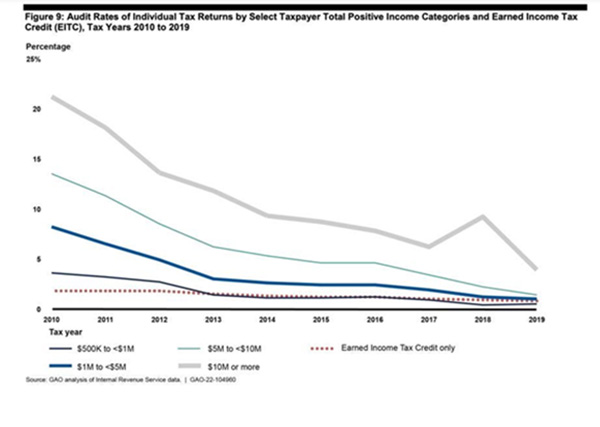




 COVID-19 impacted the economy dramatically and commercial real estate was no exception in terms of decreased values. Often, the real property could no longer service the debt used to finance it. This debt restructuring and resulting debt forgiveness can result in taxable income.
 At the very end of March, the House of Representatives passed a version of the bill known as Secure 2.0. The bill passed the House with overwhelming bipartisan support in a 414-5 vote. The House version still needs to pass in the Senate, where there are differing ideas on exactly what the bill should contain. There is strong support, so it is less of a question of if Secure 2.0 will become law than what exact version.
 The IRS is currently suffering a severe backlog in processing returns from 2021 for the 2020 tax year. As of Dec. 31, there were still more than 6 million unprocessed individual returns with notices and pending refunds. There are a few things every taxpayer should know that can help them navigate any delays in filing or speeding up the process to make filing this year as smooth as possible.
 The taxation of legal settlements and fees is a complex topic. While the mechanics to make a proper claim are now easier, the rules are still complex. Below we look at six rules to consider when it comes to the taxation of legal settlements and the deduction of legal fees on your taxes.
 No one knows for sure what 2022 will bring in the form of tax legislation, but there is certain to be some action. Top tax analysts think there are several topics that are likely to come up in 2022. Most predict that a lot of potential changes that were discussed but never made much traction in 2021 will be revisited.