
 Often the first house a person buys is an affordable condominium, townhouse or older single-family dwelling, also referred to as a “starter home.” It might be small and lack features they dream about, from new appliances in the kitchen, to dual sinks in the bath, to a large yard or a garage.
However, the key to a starter home is not to acquire your dream house, it is to build equity that you can eventually deploy to buy your dream home. It’s important not to wait until you have enough money for the ideal property. Start as early as you can and buy something affordable to get your foot in the door of homeownership.
Interest Rates and Maintenance Expenses
Buying a home when mortgage interest rates are low offers a key advantage for building wealth because it reduces your loan payment, thereby freeing up more discretionary income to put toward other investments, home upgrades or pay down the mortgage balance.
When deciding your price range for purchasing a home, it’s also important to budget common maintenance costs, such as utilities, repairs and upgrades, as well as homeowner’s insurance and property taxes. These costs can be substantial, yet many new homebuyers do not account for them in their budget. They only take into consideration whether or not they can afford the monthly mortgage. It is always a good idea to have a lower payment that you can well afford in order to avoid relying on savings or credit to pay for maintenance expenses as they arise. And remember, maintenance of your property is critical because it can help improve your sale price when you move, which is key to building wealth.
Building Home Equity
The next step to building wealth through homeownership is to sell for a substantial profit. Home equity, which is the market price for which you can sell the home minus your remaining mortgage balance, is achieved in two ways. One way to build equity relies on the real estate market. Over time, houses generally increase in price, so most people are able to sell their home for more than they paid for it. How quickly home prices rise will depend on the overall economy and your home’s particular appeal. That’s why it’s important to make an attractive location one of your top requirements. For example, even if you don’t have children or want children, buying a home in a sought-after school district will likely increase the value of your home faster. Other location features include easy access to shopping districts, major highways and even an airport.
The second way to build equity is through the monthly payments you make on the mortgage, which reduce the balance owed. If you can afford it, adding more to your monthly payment and directing the excess toward your principal balance helps build home equity faster. Another payment option that can help build equity faster is to apply for a shorter-term loan than the standard 30-year mortgage. For example, a 15-year term mortgage features a lower interest rate and the borrower pays off the loan in half the time. Note that monthly payments will be higher, but a homeowner can save thousands of dollars in interest with a shorter-term loan.
Transaction Costs
The garden variety advice is to remain in your home for at least five years. That’s because selling your home and buying a new one involves substantial transaction expenses, from closing costs to initiating a new loan, as well as paying commission fees to both the seller’s and buyer’s real estate agents (usually 3 percent each). Therefore, you need to have lived in the property long enough to build equity through payments and market appreciation to offset these expenses and still make a profit.
Sales Tax
Be aware that it is advantageous to live in your primary residence for at least two years before you sell. Otherwise, your sales profit could be subject to capital gains taxes on the first $250,000 for single tax filers, and as much as $500,000 for married filing jointly. The tax rate is the same as your ordinary income tax rate if you owned property for less than one year; after that, the capital gains rate is based on your tax bracket (15 percent or 20 percent).
Trade Up, Then Down
Over many decades, you can build wealth by buying a home and then periodically “trading up” once you attain substantial equity. The tactic of trading up means you invest your profits in a more expensive home and then begin building equity again. One way to save for retirement is to keep trading up until you retire, then downsize to a less expensive home with lower maintenance expenses. At that point, you can redeploy the profit derived from the home equity you have accumulated into a stream of retirement income.
Today’s Market
In recent years, high prices and low inventory in the residential real estate market have made it harder for young adults to buy a starter home. For those currently shut out, keep saving until the market stabilizes, because the higher your down payment, the lower your monthly payments will be – and the more equity you’ll have in your home. You can still build wealth through homeownership, even if you start late.




 Thanks to the Great Resignation trend over the past year, there is a high availability of jobs. Therefore, now is a good time for retirees who would like to go back to work to ease into the job market. However, if you’ve already begun drawing Social Security benefits, you should understand how earning income will affect those payouts.
 Starting in 2020, new legislation increased the age to begin Required Minimum Distributions (RMDs) from 70½ to 72. More recently, the IRS updated the Uniform Life Table for alignment with longer life expectancies. Note that it takes years for actuaries to work up new data for this table, and the recent changes do not reflect the downturn in life expectancies resulting from the pandemic. These updates were established pre-pandemic and scheduled to take effect in 2022.
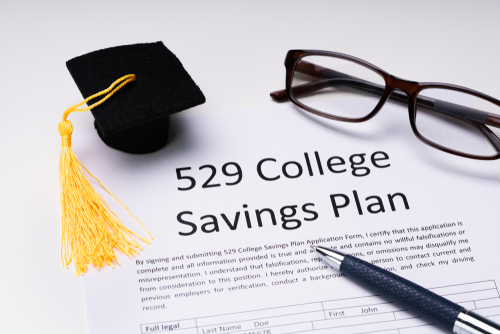 If you really want to make impact in your new grad’s life, make an investment in his or her future with a 529 College Savings account. There are two versions: an investment account and a prepaid account. Assuming you are opening an account now and don’t have time for investment growth, you may need to fund it with a significant chunk of money for it to be useful. The savings plan is good for building an investment balance over time, including while the student is in college. On the other hand, the prepaid option is a good way to reinvest a windfall – such as an inheritance or proceeds from the sale of property.
 One of the easiest ways to save for retirement is to participate in an employer-sponsored retirement plan. You simply select a percentage of your paycheck that you would like transferred to your 401(k) (or similar) account. Not only does your employer make the transfer for you, but it comes out of your paycheck before income taxes are taken out. This way, you avoid paying taxes on that income from each paycheck, and those taxes are not due until you withdraw the money from your retirement plan. This usually happens once people retire and enter a lower tax bracket.
 If you pay $250 a month for cable and premium channels, that’s $3,000 a year. Over a 30-year period, the total cost would be $90,000. We don’t tend to think about how much we pay in regular expenses over the long term.